
The Technology
The FreshStart Advanced Oxidation Process (AOP)
In chemistry, radicals (often referred to as free radicals) are atoms, molecules, or ions with unpaired electrons or an open shell. When an electron occupies an orbital path around an atom singly, rather than as part of an electron pair, with rare exceptions, it causes an energetically unstable state wherein these unpaired electrons cause radicals to be highly chemically reactive. Radicals are represented by a superscript dot (R•). Free radicals play an important role in several different chemical reactions, including combustion, atmospheric chemistry, polymerization, plasma chemistry, biochemistry, and many other processes.
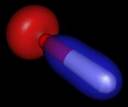
The hydroxyl radical (OH•) is one of the most reactive particles in nature, and is the neutral form of the hydroxide ion (OH–). Specifically, the hydroxyl radical is a compound containing an oxygen atom bound covalently with a hydrogen atom. Due to its high reactivity, it has a very short half-life; however, it forms an important part of atmospheric chemistry and is known as “the detergent of the atmosphere.” Practically all compounds in the troposphere react with OH• radicals, and it oxidizes them into harmless molecules such as carbon dioxide and water, preventing their accumulation and atmosphere contamination. It is a natural process that has evolved into one of the most important processes in the Earth’s atmosphere.
To better understand the nature of the FreshStart process, it is important to first look at the process of the hydroxyl radical’s formation in the stratosphere. Hydroxyl radicals govern atmospheric chemistry during the day, since their formation depends on radiation from the sun. The initial reaction involves the breakdown of ozone by solar radiation, following which the oxygen atom formed then reacts with water to form OH•:
O₃ + Photon → O + O₂ O + H₂O → 2 OH•
Since OH• is an extremely reactive radical, it reacts as soon as it is formed. Its half-life is less than a second, which means that its concentration is extremely low (i.e. only one of 1,000 billion to 100,000 billion molecules in the air is OH•).
The patented FreshStart process replicates this natural cleaning process, with the sources of hydroxyl radicals being hydrogen peroxide and water. This process increases the OH• formation rate by a factor of six, and also causes the chemical oxidation reactions to occur simultaneously in the air as well as on the surfaces within the area to be treated. Three powerful oxidizing agents are used together: ozone, hydrogen peroxide and ultraviolet light. Their mix creates a unique process that is synergistically hundreds of times stronger than the simple sum of the individual elements — a process referred to as an Advanced Oxidation Process (AOP). The efficiency of the process depends on the correct ratio between oxidants and humidity, and within optimum dosage conditions the rate of reaction efficacy increases exponentially and the cleaning time needed can be reduced dramatically.
Biological Significance of the FreshStart AOP
As noted above, the reactivity of hydroxyl radicals is extremely high. In contrast to other radicals that are relatively stable and have relatively low reaction rates with biological components, hydroxyl radicals are short-lived species possessing a high affinity toward other molecules. The hydroxyl radical is a powerful oxidizing agent that reacts at a high rate with most organic and inorganic molecules in the cell, including DNA, proteins, lipids, amino acids, sugars, and metals.
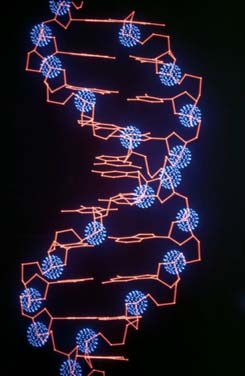
As a result, the FreshStart AOP oxidizes and damages viruses (including Norwalk, SARS, H1N1 and avian flu), gram-negative and gram-positive bacteria (including anthrax and MRSA), allergens (dust mite feces and particulates, pet dander and most others), molds (including Stachybotrys and Aspergillus), and carbon- or sulfur-based odiferous compounds such as skunk, tobacco smoke and cooking odors. The three main chemical reactions of hydroxyl radicals include hydrogen abstraction, addition, and electron transfer. OH• is considered the most reactive radical in Earth’s biological systems; due to its high reactivity, it interacts at the site of its production and with the molecules closely surrounding it.
In addition to hydroxyl radicals, a number of different oxidants form during the FreshStart AOP. In biological systems these oxidants are known as Reactive Oxygen Species (ROS).
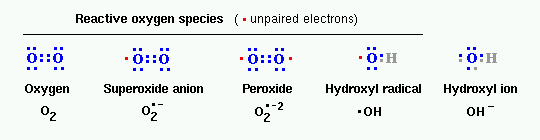
Note the difference between the hydroxyl radical and the hydroxyl ion, which is not a radical. Another radical derived from oxygen is singlet oxygen, designated as ¹O₂. This is an excited form of oxygen in which one of the electrons jumps to a higher orbital path following the absorption of energy.
One of the best-known disruptive effects of ROS is damage to cellular membranes (plasma, mitochondrial and endomembrane systems), which is initiated by a process known as lipid peroxidation. A common target for peroxidation is the unsaturated fatty acids present in membrane phospholipids.
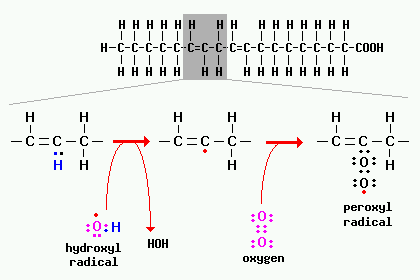
Reactions involving radicals occur in chain reactions. In the figure above, hydrogen is abstracted from the fatty acid by the hydroxyl radical, leaving a carbon-centered radical as part of the fatty acid. That radical then reacts with oxygen to yield the peroxyl radical, which can then continue to react with other fatty acids or proteins. Peroxidation of membrane lipids can have numerous effects, including increased membrane rigidity, decreased activity of membrane-bound enzymes, altered activity of membrane receptors and altered permeability. In addition to the effects on phospholipids, radicals can also directly attack membrane proteins and induce lipid-lipid, lipid-protein and protein-protein cross linking, all of which affect membrane function.
The biological significance of this patented gaseous-state AOP is its ability to quickly destroy virus, bacteria, pathogens, allergens and VOCs simultaneously in the air and on the surfaces within the area being treated (carpet, furniture, walls), causing the carbon-based molecular structures of the living organisms to break down and become nonviable. At the conclusion of the FreshStart AOP, the space being treated is immediately available for safe re-habitation, without residual particulate matter or damaging moisture.
This page was converted from the original FreshStart AOP Technology PDF document.